

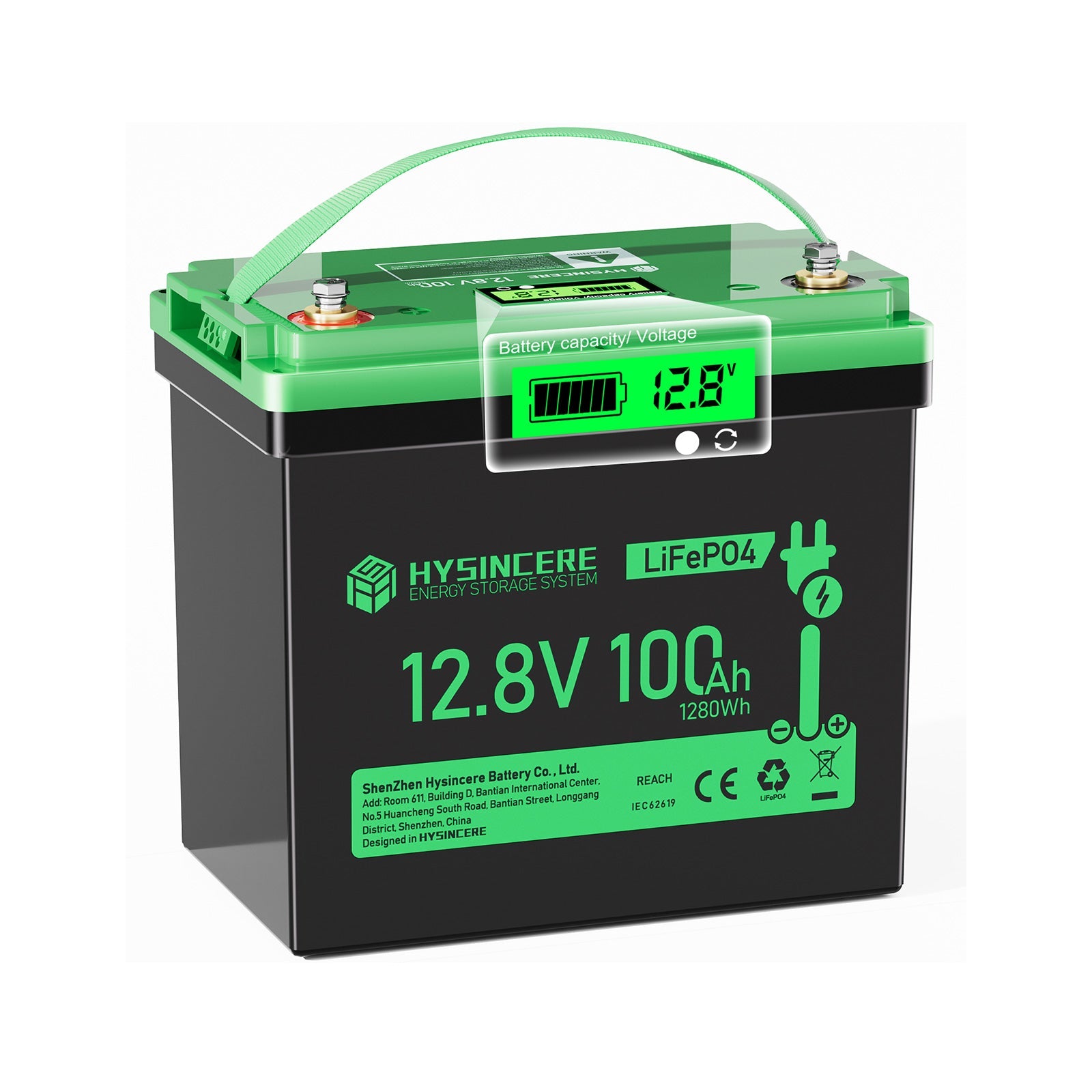
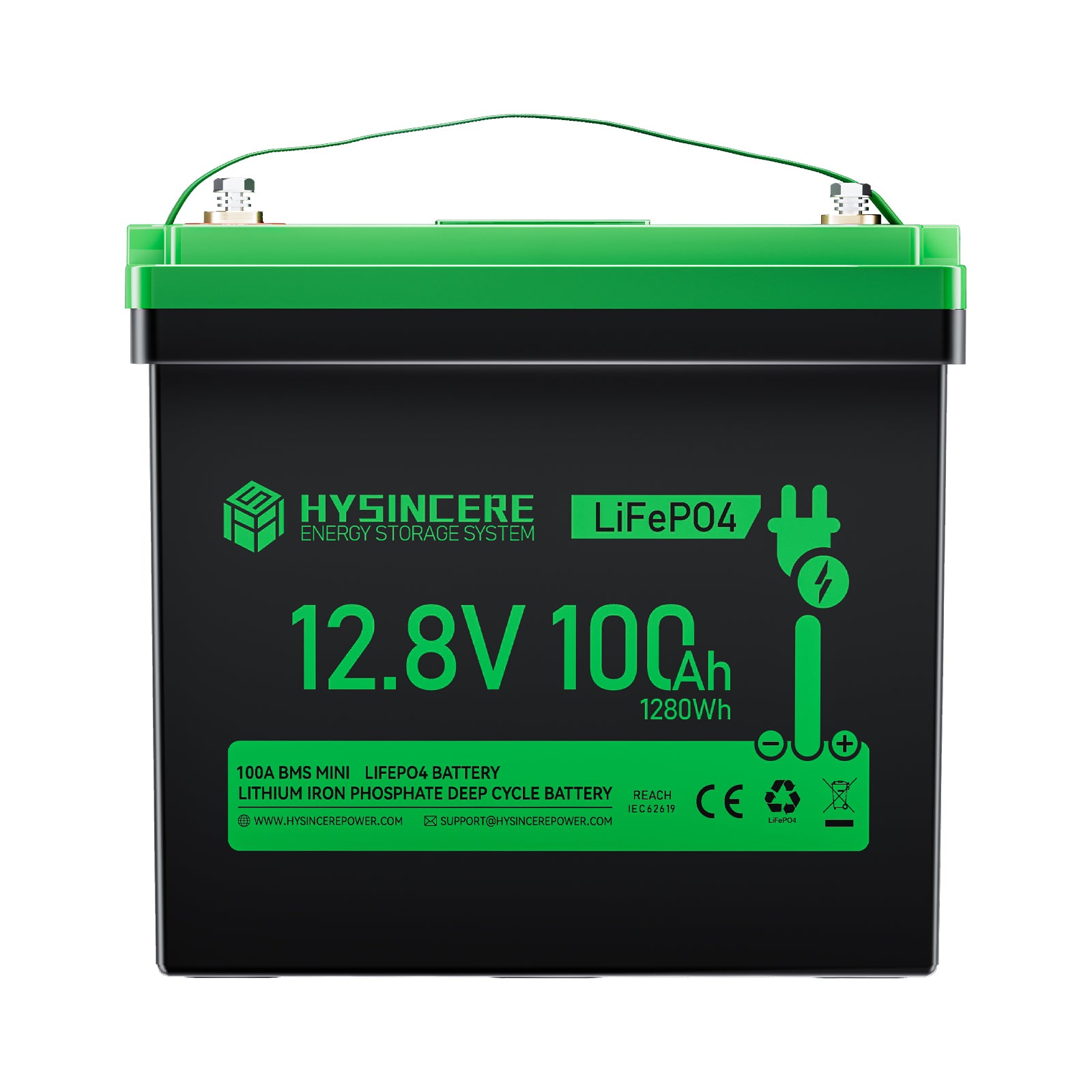
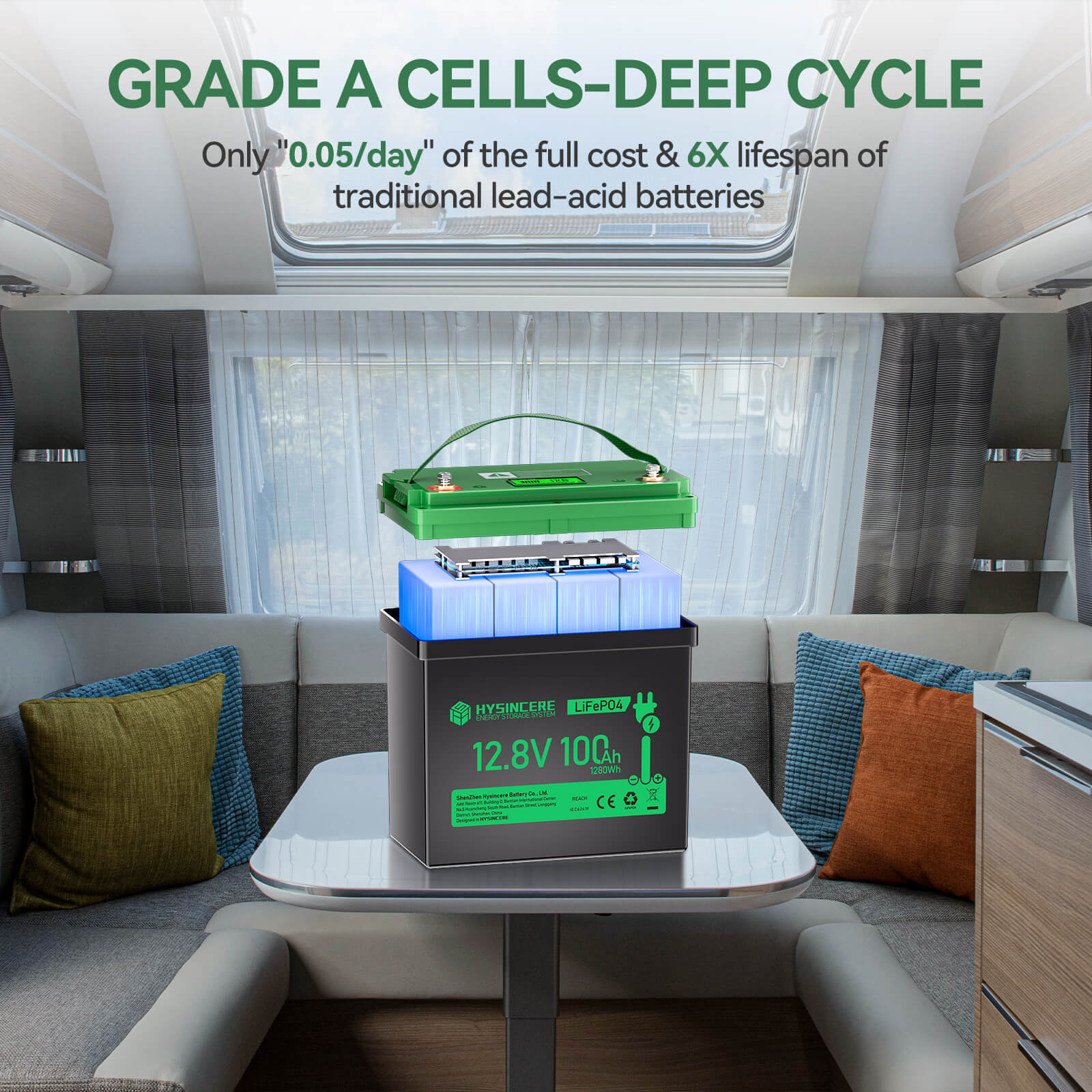
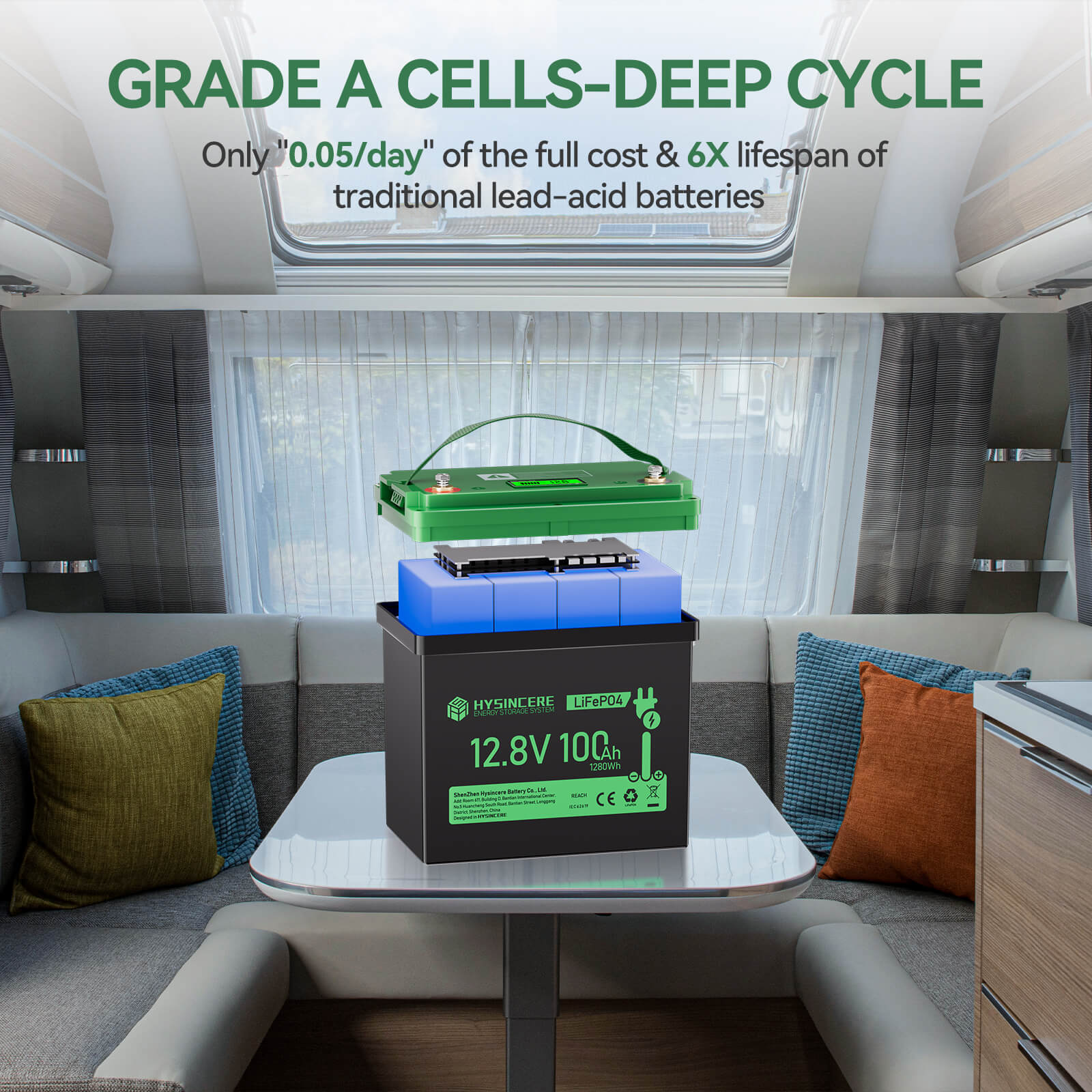
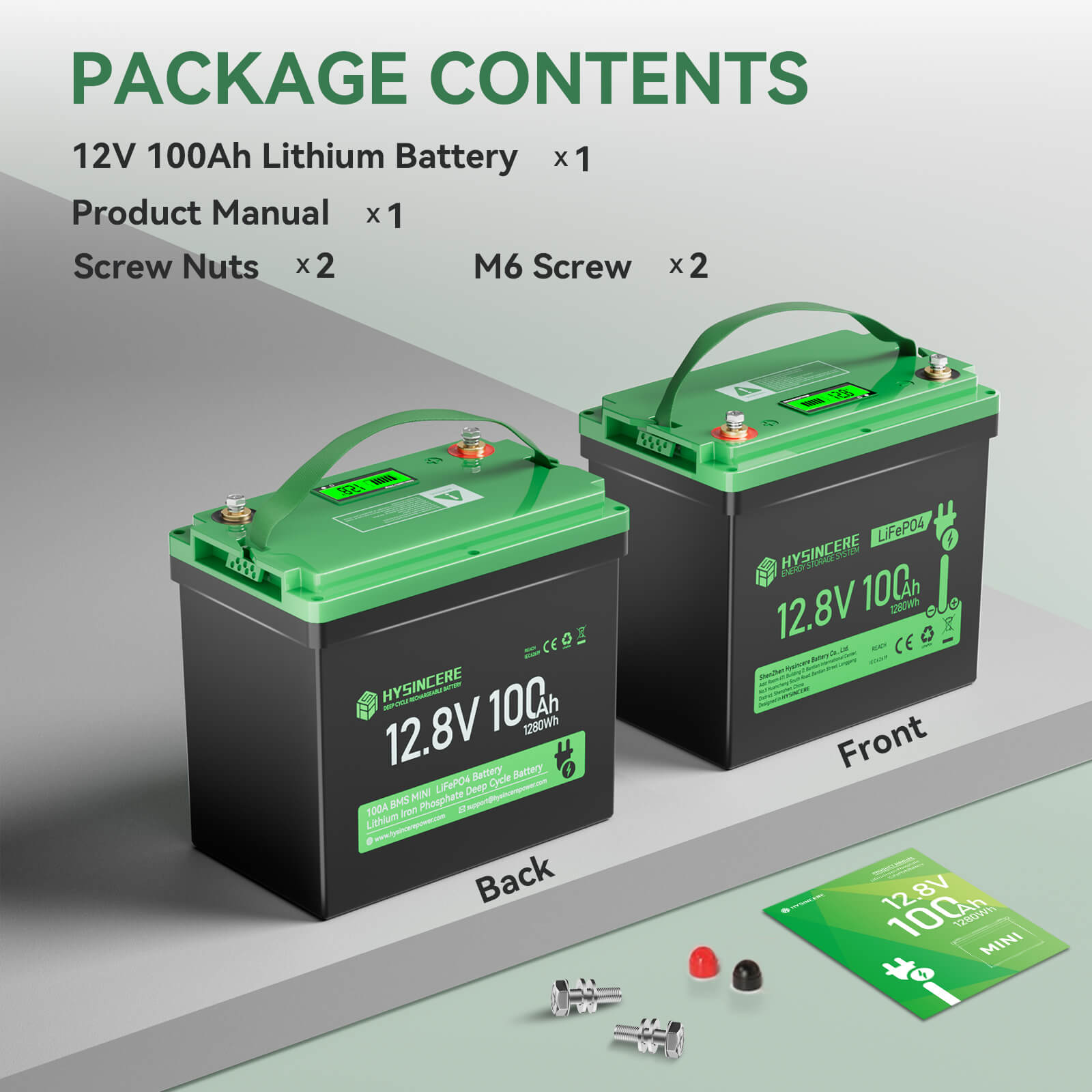

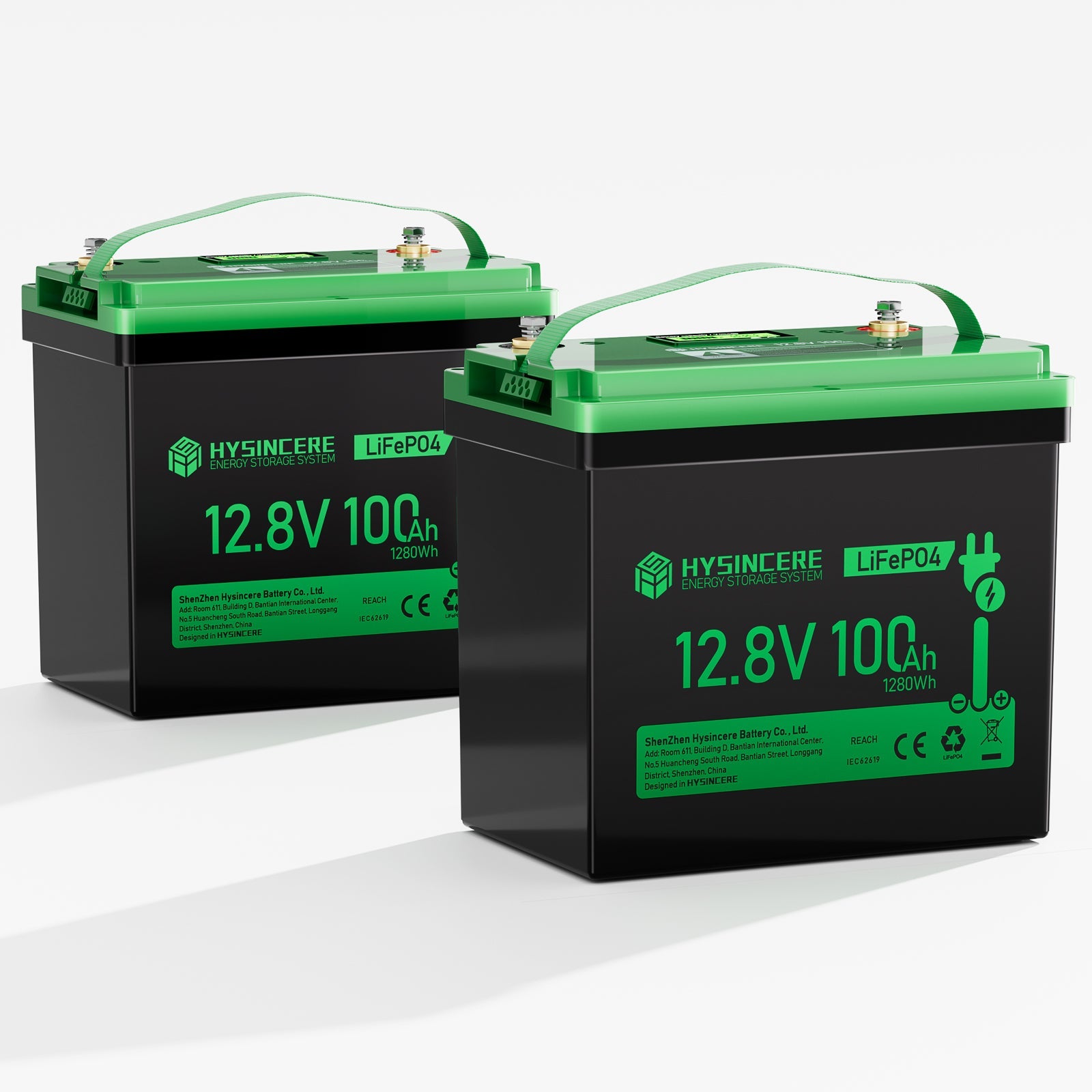
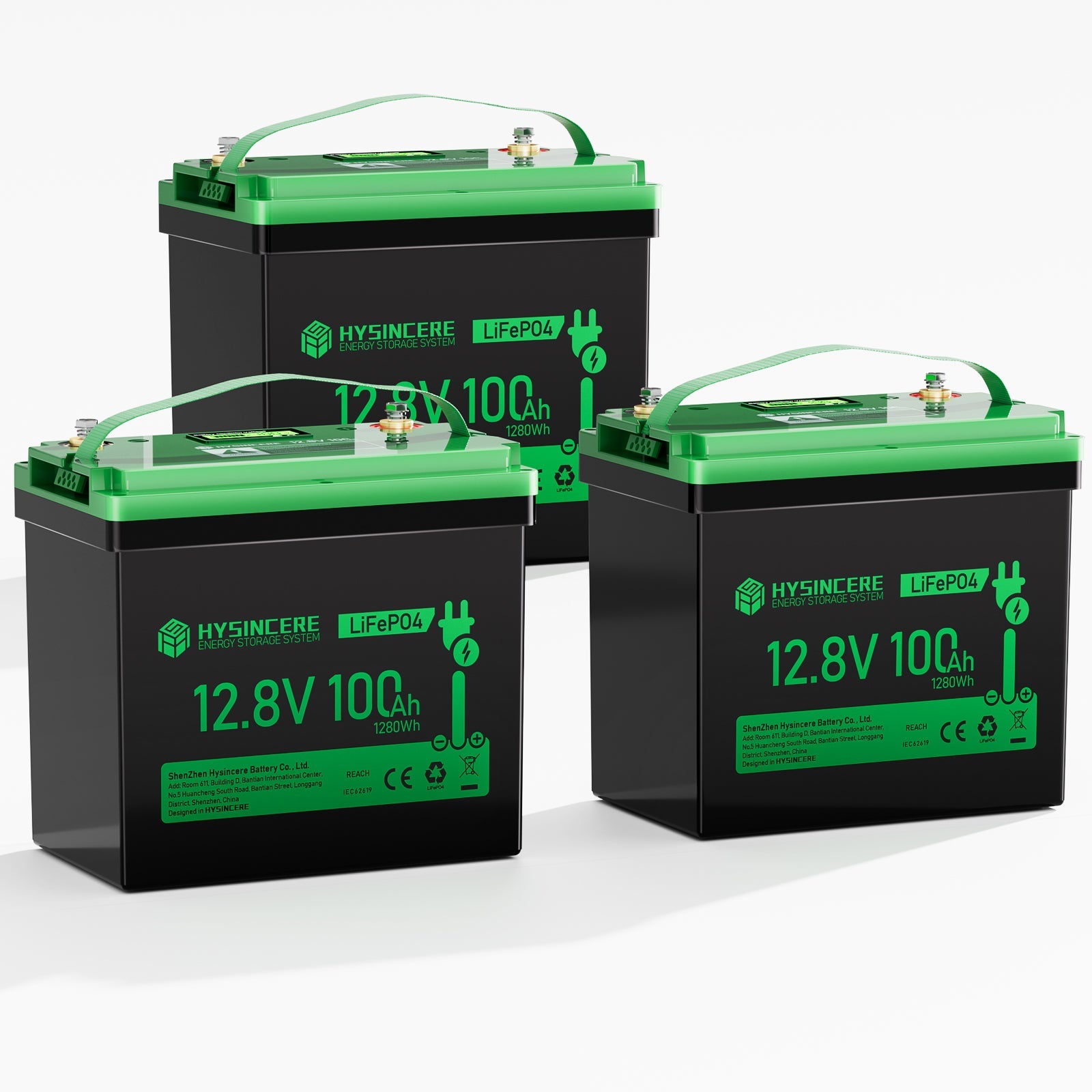
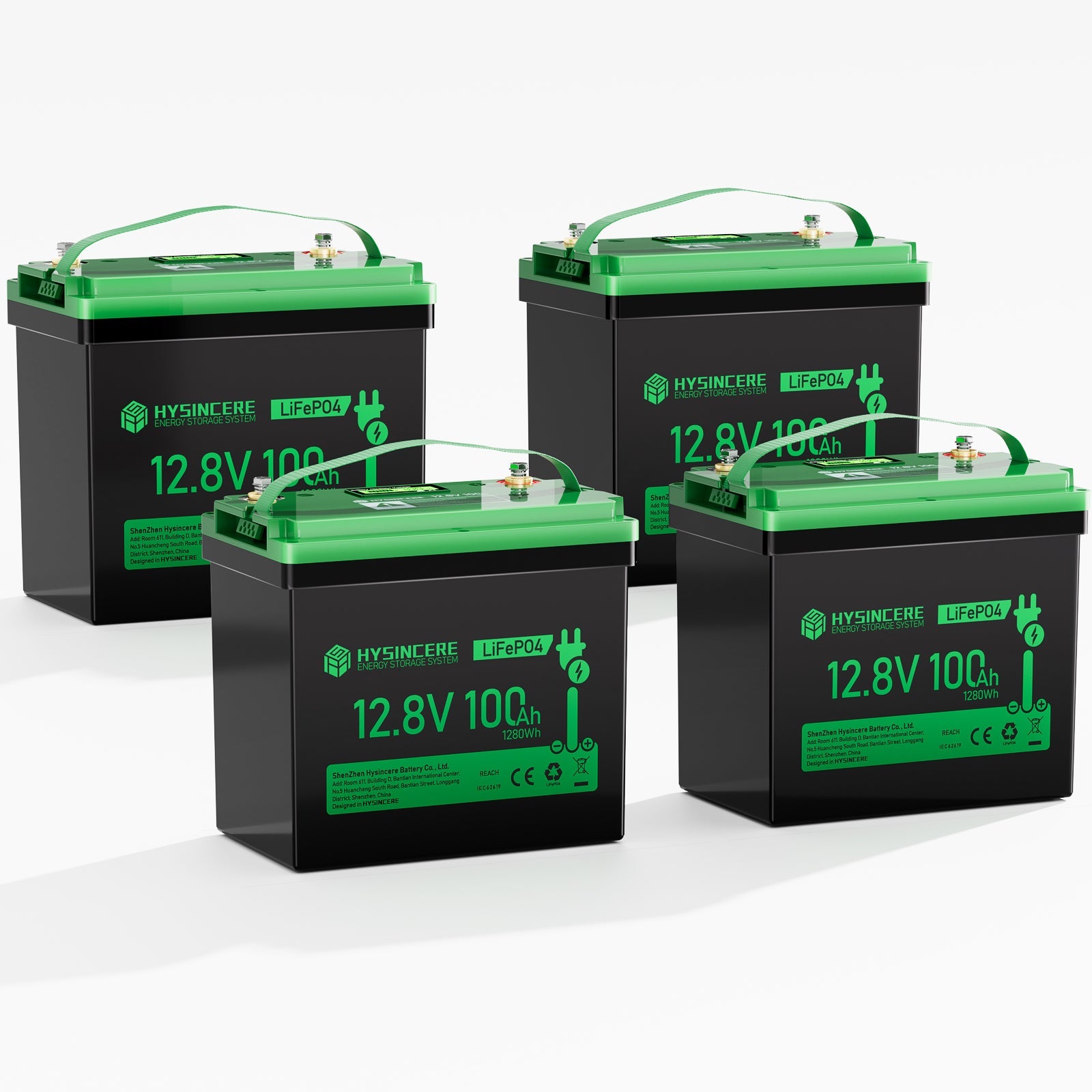
Hysincere Power 12V 100Ah Group 24 LiFePO4 Battery
-
• 1/6*Lightweight & More Faster Charged
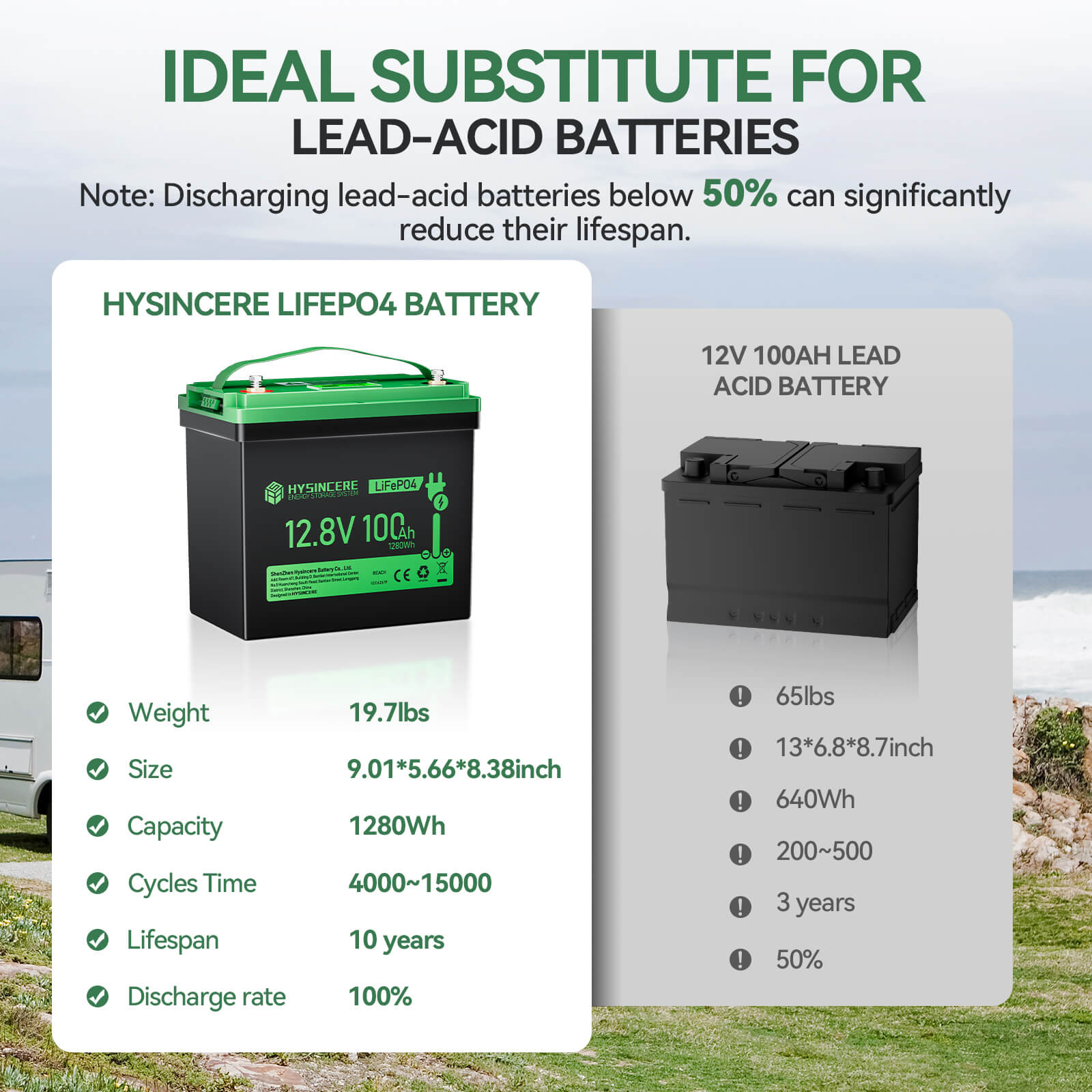
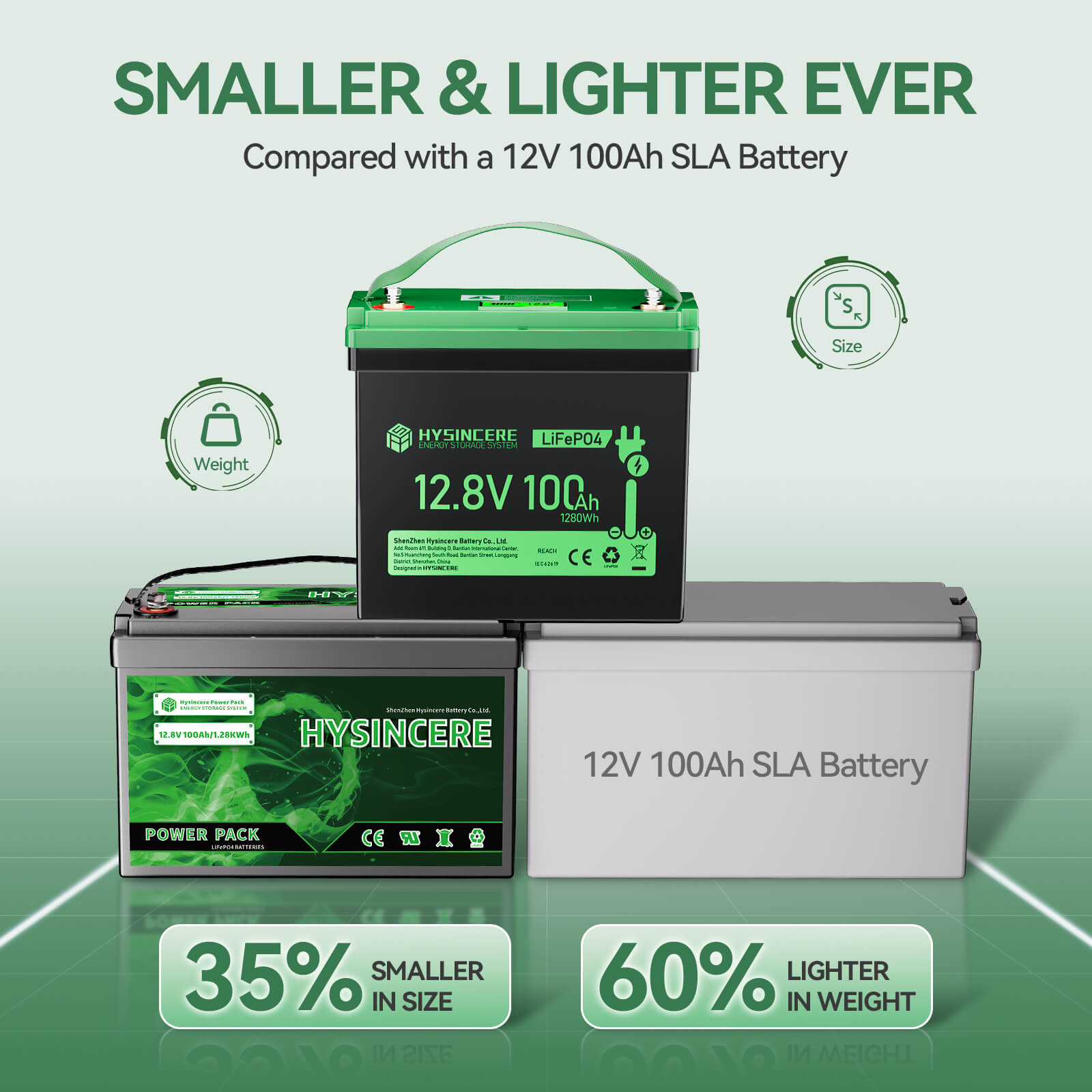
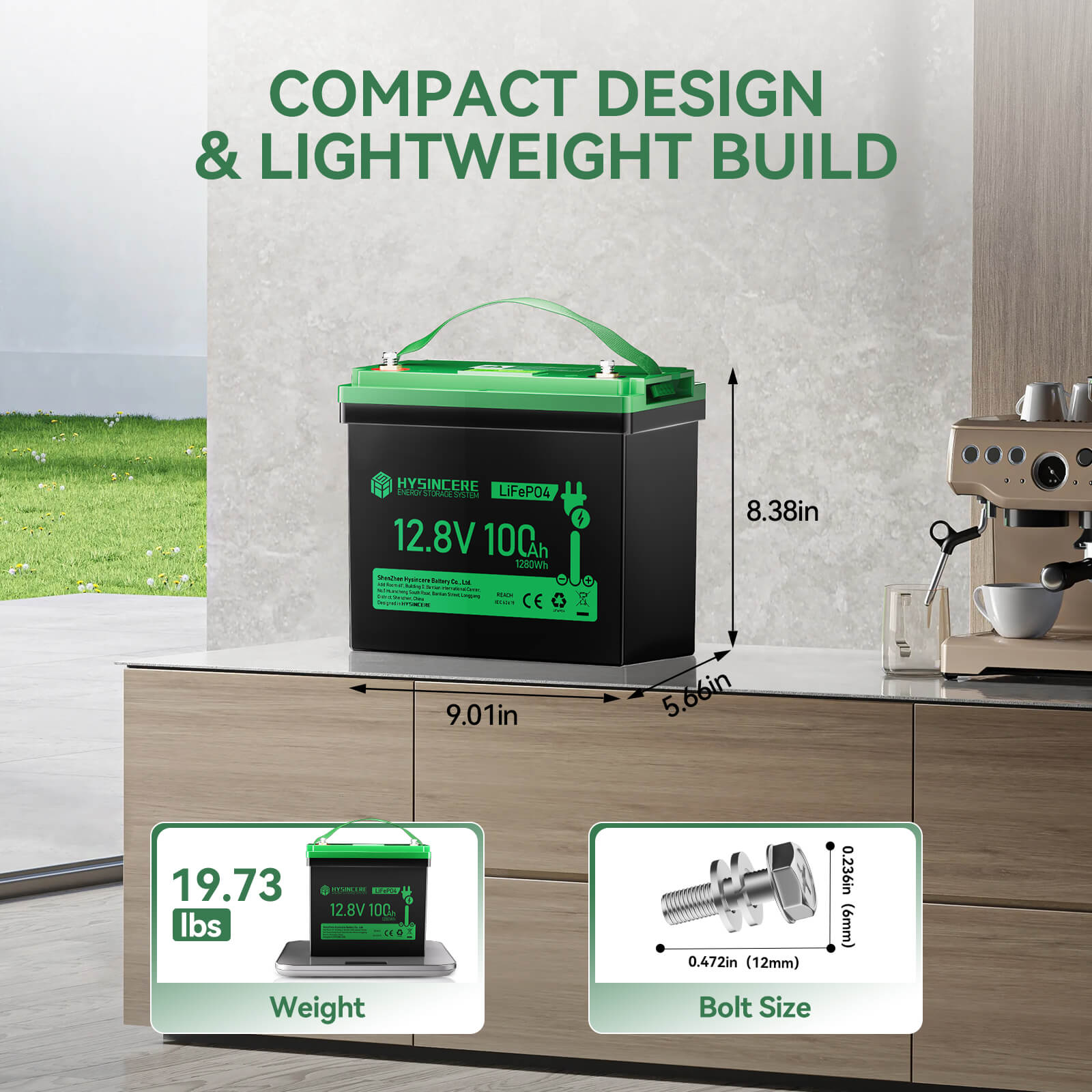
Hysincere Power 12V 100Ah LiFePO4 battery has a lightweight of 20.95lbs, only 1/6 of a 12V 200Ah lead acid battery (about 130lbs), but equivalent in energy, faster to be fully charged, 'Group 31 Size' which makes it easier to carry and more convenient to use. In contrast, Lead-acid/SLA/AGM batteries typically only last for 3 years with 200-500 cycles, it can perfectly replace 12V 100Ah lead-acid batteries and 12V 200Ah lead-acid batteries.• Energy Expansion & Widely Used
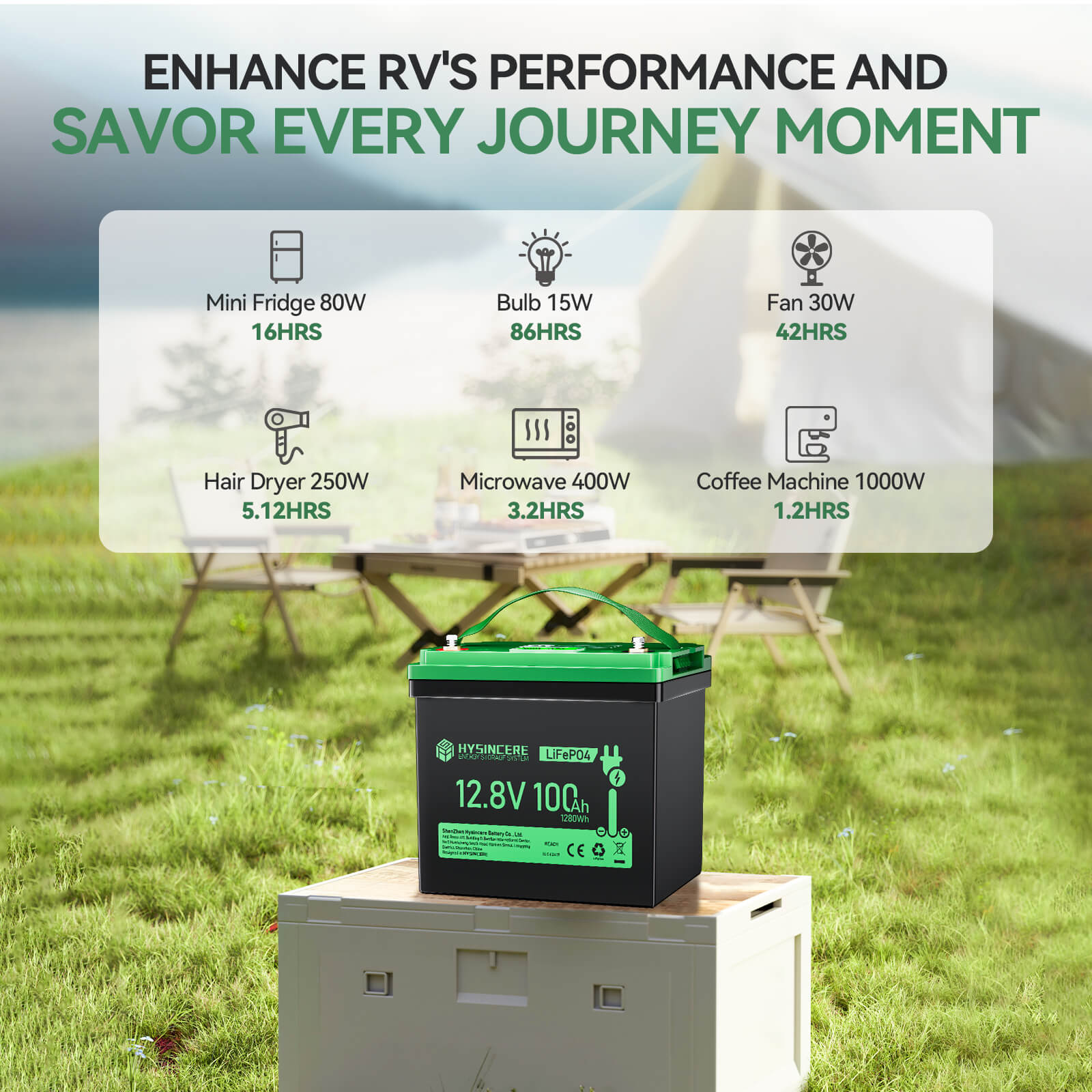
The Hysincere 12.8V 100Ah LiFePO4 battery supports 4P4S ( 4 in series or 4 in parellel) for larger capacity. To achieve Max 400Ah capacity or Max 48V(51.2V) voltage, max. 20.48 kWh load power. Widely used in most areas such as RV, Solar, Household Battery, Off-Grid System, Camping, Marine, Home energy storage, Computer power backup, solar panel and so on.• Upgrade BMS System
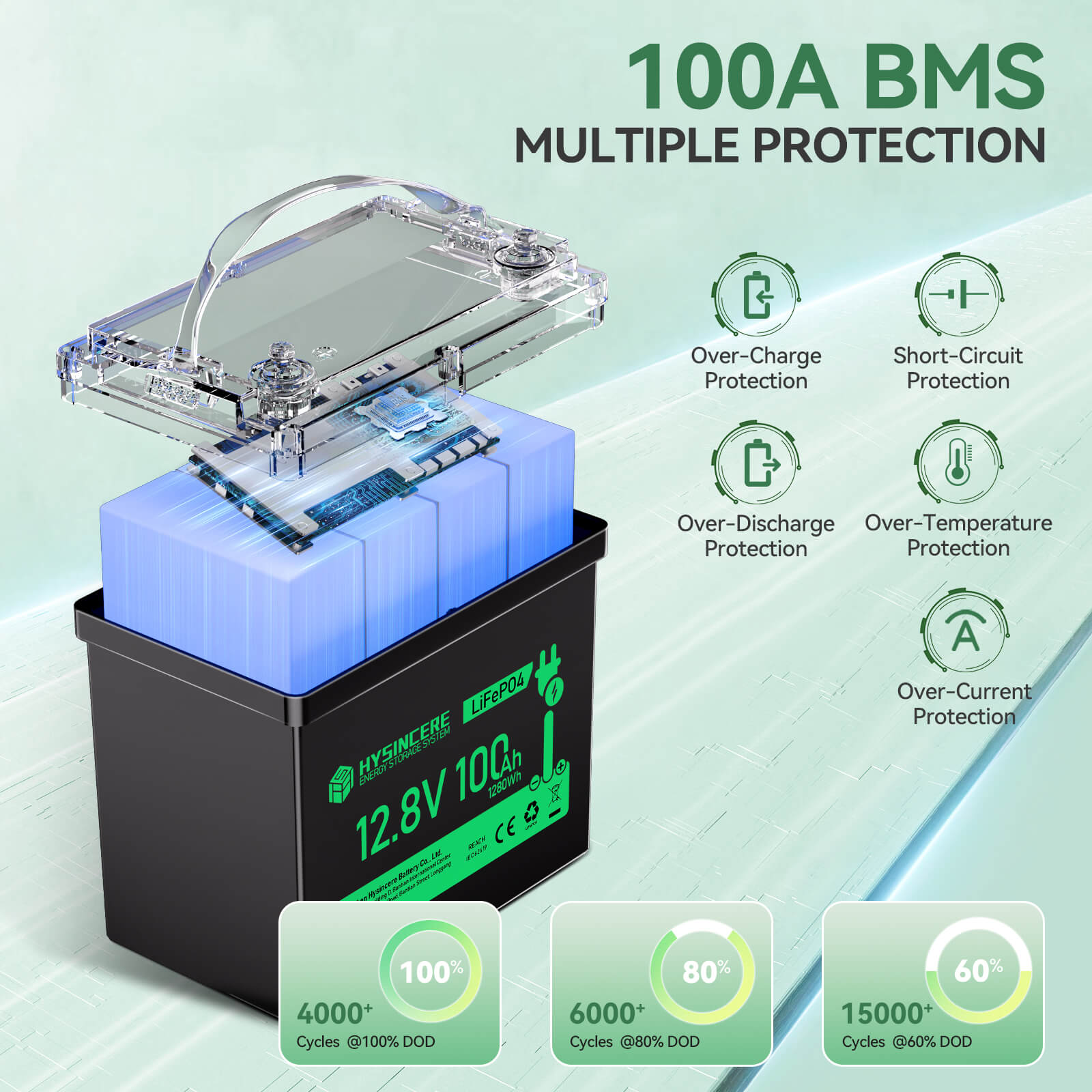
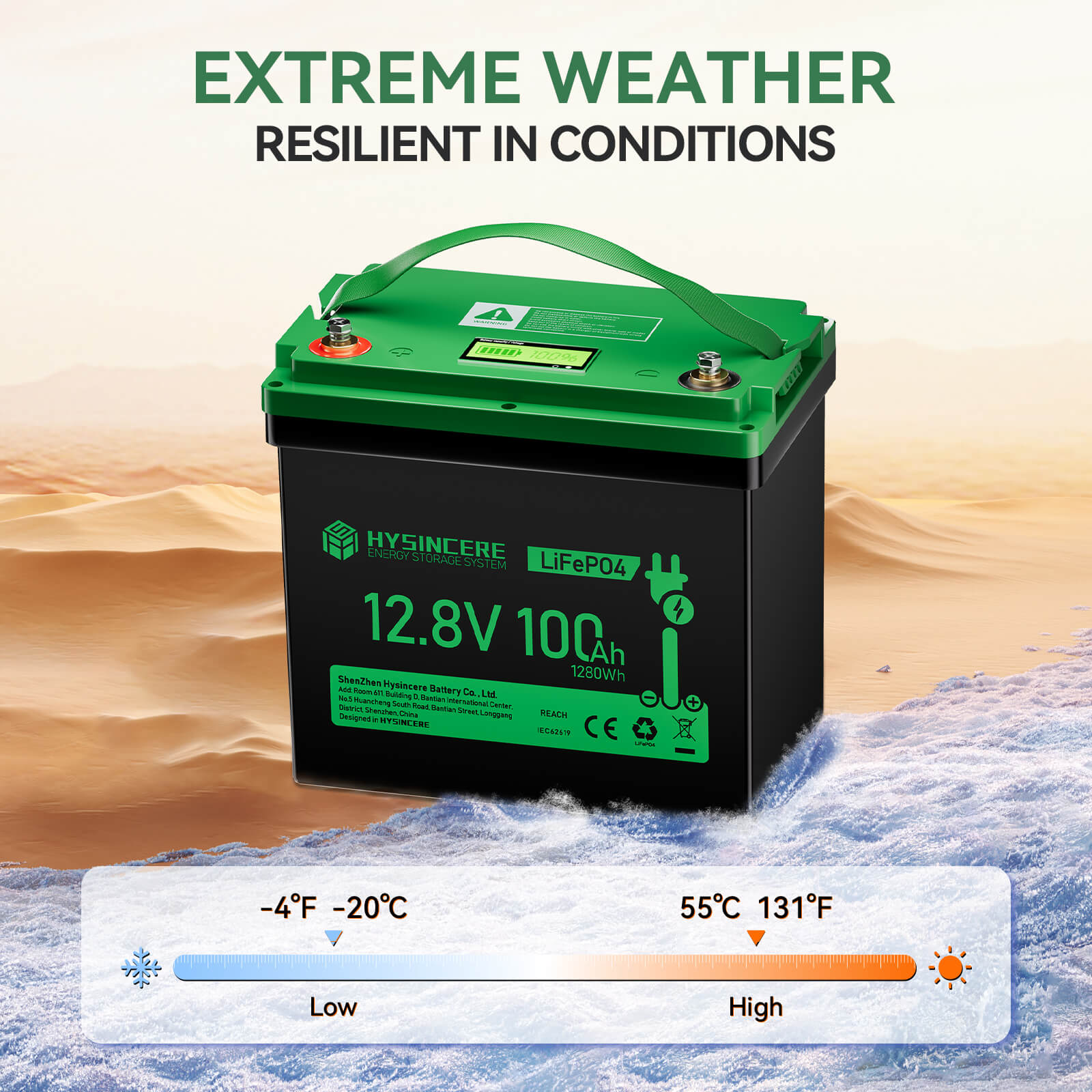
Our trolling motor battery has built-in 100A BMS (Battery Management System) to protect it from overcharge, over-discharge, over-current, and short circuit with excellent self-discharge rate. Offering you a powerful and stable power supply. Notes: Please do not charge the battery at 32°F(0℃)or below, it can well discharge at low temp environment from -4°F to 140°F.• 5 Years Guarantee & 10 Years Lifespan
12.8V LiFePO4 lithium battery provides deep cycles. 4000 time cycles at 100% DOD, 6000 time cycles at 80% DOD, 15000 Time Cycles at 60% DOD, ensuring a minimum ten-year lifespan. LiFePO4 cells offers higher energy density and a lightweight, making the batteries down weight to 20.95lbs, only 1/3 of a 12V 100Ah lead acid battery.
- Pack:
- 1 Pack
Popular upgrades
In stock! Ships within 1-2 business days.
30-day risk-free trial
5-Year Warranty
Complimentary shipping & returns
Specs

FAQs
What should you do when you receive a new battery?
When you receive your battery, it may have a low state of charge (SOC) due to transportation and storage. To ensure optimal performance, charge the battery immediately to avoid over-discharge.
Batteries with Bluetooth functionality may arrive in an off state, showing a terminal voltage between 3V and 5V, and you won't be able to connect them to your phone. This is because they are shipped powered off, similar to mobile phones, to minimize self-discharge and extend the battery's lifespan.
There are 2 ways to solve the problem: using an AC-DC lithium battery charger or an MPPT solar charge controller to charge it for 3 to 10 seconds, then the battery can be used normally.
If you plan to store the battery for a long time, charge it to a SOC of 50% and perform maintenance every three months. This will help preserve its functionality and performance.
Can I connect Hysincere Power lithium batteries in series or parallel?
Hysincere batteries support series and parallel connections for the same model.
If your goal is to increase the battery system voltage, we recommend connecting the batteries in series.
If your goal is to increase the battery system capacity, we recommend connecting the batteries in parallel.
Important Notes:
Series and parallel connections are only supported for batteries of the same brand and model. Batteries from different brands or models may have different BMS settings, which can prevent the battery system from functioning properly.
If the batteries you plan to connect have been used for significantly different durations, they must be balanced first. Ensure all batteries have the same voltage level before proceeding with the series or parallel connection.
If you are unfamiliar with the connection process or have any other questions, feel free to contact our customer service team.
📧 Email: support@hysincerepower.com
Can Hysincere Power lithium batteries be paired with inverters?
Yes, Hysincere Power Lithium Batteries can be paired with inverters to convert the DC power stored in the battery into AC power, which is necessary for operating most household appliances.
Hysincere Power pure sine wave inverters are particularly beneficial for powering devices such as air conditioners, microwaves, or televisions. It’s crucial to select an inverter that is compatible with deep cycle lithium batteries to ensure optimal performance.
Combining lithium batteries with a suitable inverter guarantees a reliable power supply for your appliances during your travels.
How to enjoy warranty service?
To enjoy warranty service, please follow these steps:
– If your product is within the warranty period and requires service, reach out to our customer support team via email at support@hysincerepower.com.
– When contacting us, please provide the product details (such as the model, purchase date, and proof of purchase) and a description of the issue.
– Our team will guide you through the warranty process and provide instructions on how to proceed, whether it’s a repair, replacement, or refund.
Please refer to our warranty policy for more information.
How can you help extend the lifespan of a LiFePO₄ battery?
1.Avoid Overcharging and Overdischarging
Overcharging: Overcharging can cause internal decomposition of the battery, increase its internal resistance, and even damage the chemical structure of the battery. Ensure you use the correct charger and stop charging once the battery is fully charged.
Overdischarging: Discharging the battery to too low a level accelerates aging and may render the battery unrecoverable. Try to avoid letting the battery charge drop below 20%.
2.Maintain an Appropriate Temperature Range
Charging Temperature: It is best to charge lithium iron phosphate batteries within the temperature range of 0°C to 45°C. Both high and low temperatures can affect charging efficiency and battery life.
Operating Temperature: Avoid using the battery in extremely high or low-temperature environments. High temperatures may cause overheating or even fire, while low temperatures can reduce the battery’s performance.
3.Regularly Check Battery Condition
Regularly check the battery’s appearance, wiring, and connection terminals to ensure there is no corrosion, damage, or loosening. Damaged batteries or wiring could lead to failures.
Use a Battery Management System (BMS) to monitor the battery’s health and detect any abnormalities.
4.Avoid Long Periods of Inactivity
If you won’t be using the battery for an extended period, it is best to store it with a charge level between 40% and 60%. A battery that is overcharged or overdischarged and not used for a long time may experience a decrease in performance.
5.Use Suitable Charging Equipment
Use chargers specifically designed for lithium iron phosphate batteries. The charger’s output voltage and current should not exceed the battery’s specifications, as this could lead to overcharging, overheating, or other issues.
6.Avoid Short Circuits and Battery Overheating
Ensure the battery connections are secure and avoid any situations that could lead to a short circuit. A short circuit can damage the battery and even cause a fire.
Ensure the battery is placed in a well-ventilated area to avoid overheating. Overheating can not only affect performance but also shorten the battery’s lifespan.
7.Avoid Vibration and Impact
Lithium iron phosphate batteries can be damaged by severe vibrations or impacts, which can affect their electrochemical performance. Ensure the battery is protected from excessive vibration or impact during both use and storage.